Holiday buffets can turn eating into a mental tug-of-war. You see your favorite foods, hear someone comment about calories, and suddenly you’re trying to decide whether to “be good” now or eat everything because you’ll start a diet again in January.
A more useful approach is to step away from the idea that you need to earn, restrict, or compensate for holiday food. Mindful holiday eating means paying attention to hunger, satisfaction, enjoyment, and your overall experience while allowing festive foods to be part of the meal. It does not require perfect portions or avoiding dessert.
The goal is not to leave a buffet feeling like you followed every nutrition rule. It is to leave feeling physically comfortable, satisfied, and able to enjoy the people and traditions around you.
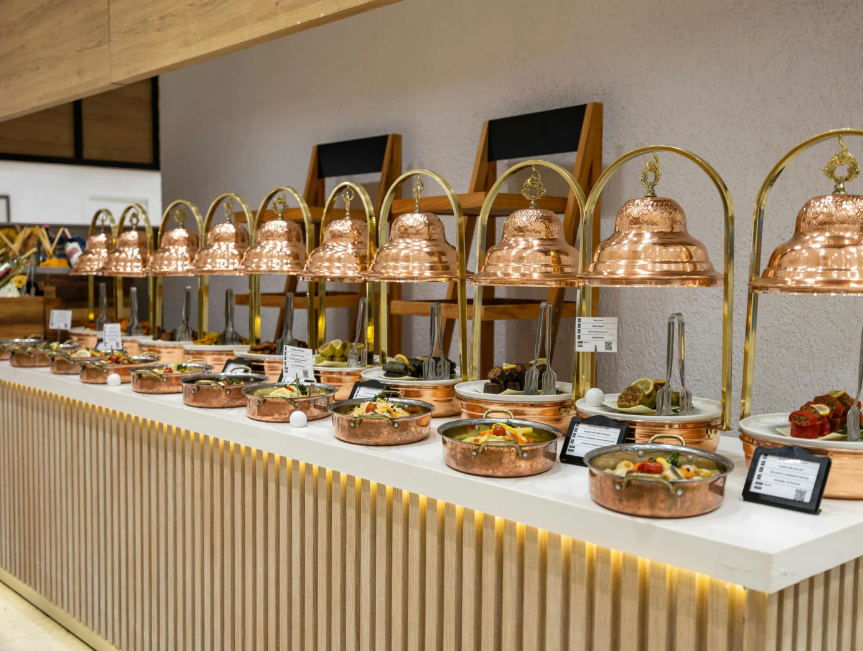
What Mindful Holiday Eating Actually Looks Like
Mindful holiday eating is less about eating slowly for a prescribed number of minutes and more about becoming aware of what is happening while you eat.
That includes noticing whether you arrived at the buffet genuinely hungry, which foods you actually want, how the food tastes, and how satisfied you feel as the meal progresses. Harvard’s T.H. Chan School of Public Health describes mindful eating as paying attention to the eating experience and physical and emotional cues without judgment.
This distinction matters during the holidays because food often carries emotional and social meaning. Grandma’s pie may not be something you eat because you are physically hungry. You may want it because it reminds you of home. That is not a nutritional failure.
A flexible approach also makes room for foods you simply enjoy. The National Eating Disorders Association notes that holiday foods can fit into a balanced eating pattern and that giving yourself permission to enjoy festive favorites can support a more flexible relationship with food.
For many people, mindful holiday eating starts with replacing the question “What am I allowed to eat?” with “What would feel satisfying right now?”
Don’t Save All Your Food for the Buffet
One of the most common holiday strategies is also one of the least helpful: skipping breakfast and lunch so you can “save calories” for dinner.
It sounds logical. In practice, arriving at a party extremely hungry can make it much harder to pause, assess your options, and recognize satisfaction.
Think of hunger like a volume dial. Mild or moderate hunger gives you room to make choices. Extreme hunger can make the buffet feel like an emergency.
Instead, eat normally earlier in the day. A breakfast or lunch containing protein, carbohydrates, fat, and fiber can help you arrive at the event ready to enjoy food rather than feeling as though you have to make up for everything you missed.
The same principle applies if the buffet starts late. A snack before leaving home may be useful if you know dinner will not happen for several hours.
This is not about controlling exactly how much you eat later. It is about removing unnecessary deprivation from the equation.
Build a Buffet Plate You Will Actually Enjoy
A buffet can be overwhelming because there are usually more choices than you could reasonably eat in one sitting. You do not need to sample everything.
Before picking up your plate, take a quick look at the entire spread. Notice what is available, then decide which foods genuinely appeal to you.
A simple plate-building strategy is to combine foods that provide different kinds of satisfaction. You might choose a protein-rich dish, vegetables or fruit, a carbohydrate you enjoy, and one or two traditional holiday foods that you would genuinely miss if they were not there.
There is no mandatory percentage for each section of your plate. The point is variety and satisfaction, not mathematical precision.
For example, a holiday buffet plate might include turkey, roasted vegetables, mashed potatoes, stuffing, and a small serving of a favorite family casserole. Another person might choose ham, salad, macaroni and cheese, roasted sweet potatoes, and rolls.
Both can be reasonable meals.
And if you want dessert, you do not need to make your entire plate “healthy” first to justify having it.
Give Yourself Permission to Go Back for More
Buffets create a strange psychological pressure: “This is my only chance.”
When a food feels forbidden, the brain can give it more attention. You may eat quickly because you are worried that you should not have it again.
Instead, remind yourself that you are allowed to have the food.
That does not mean you need to keep eating. It means you can eat the food, enjoy it, and decide afterward whether you want more.
If you finish your plate and are still hungry, getting another serving is completely reasonable. If you are comfortably satisfied but want a little more of your favorite dessert because it was delicious, that can be a conscious choice too.
This is where mindful holiday eating differs from rigid portion control. The goal is not to make the “perfect” choice every time. It is to create enough awareness that you can make decisions intentionally.
Slow Down Without Turning Dinner Into a Mindfulness Exercise
“Eat slowly” is common advice, but it can become another rule to worry about.
You do not need to count bites or chew every mouthful a certain number of times. Instead, create a few natural pauses.
Put your fork down while talking. Take a sip of water. Notice whether the next bite sounds appealing. Pay attention to changes in hunger and fullness.
You can also ask yourself three simple questions:
Am I still hungry?
Am I still enjoying this?
Would something else be more satisfying?
These questions shift your attention away from calorie calculations and toward the actual eating experience.
Mindful eating is not about judging the answer. If you realize you are full, you can stop. If you realize you still want more, you can continue.
That flexibility is important.
What to Do When You Overeat
Even with the best intentions, you may occasionally eat beyond comfortable fullness at a holiday gathering.
The most important response is not punishment.
You do not need to skip breakfast the next morning, dramatically cut calories, or exercise to “burn off” the meal. Returning to your normal eating routine is generally a more useful response than creating another cycle of restriction.
This is especially important because guilt can quickly turn one uncomfortable meal into an entire weekend of all-or-nothing thinking.
Try replacing “I ruined everything” with something more factual: “I ate more than was comfortable, and now I know what that felt like.”
Maybe you were especially hungry when you arrived. Maybe you were distracted. Maybe you kept eating because everyone else was still at the table. Maybe the food was simply wonderful.
Curiosity gives you information. Shame rarely does.
The National Eating Disorders Association similarly recommends approaching holiday eating with flexibility and support rather than judgment, particularly for people who struggle with disordered eating or eating-related anxiety.
When Mindful Eating Isn’t Enough
There is an important limitation to the advice above: mindful eating is not a universal solution for binge eating or an eating disorder.
If you regularly experience episodes of feeling unable to control your eating, significant distress around food, compensatory behaviors, or intense anxiety about eating, simply telling yourself to “be mindful” may not address the underlying issue.
Binge eating can involve psychological, behavioral, emotional, and environmental factors. People dealing with an eating disorder may need individualized support from qualified healthcare professionals rather than another set of food rules.
In those situations, preparation can be more structured. NEDA recommends working with appropriate support systems and developing coping strategies for challenging holiday situations.
There is no failure in needing more support. In fact, recognizing when a strategy is not enough is part of taking care of yourself.
Make the Holiday About More Than the Food
A buffet becomes much less consuming when it is not the only thing happening.
Move away from the food table after eating. Talk with relatives. Help clean up. Play a game. Take a walk. Listen to music. Watch a movie. Focus on the traditions that brought everyone together in the first place.
This does not mean distracting yourself from hunger or using activity to compensate for eating. It simply gives the meal its proper place within a larger celebration.
It can also help to set boundaries around food and body conversations. If someone starts commenting on your weight, your plate, or how much you are eating, you can change the subject or step away from the conversation.
Holiday gatherings do not require you to participate in every conversation about diets, calories, weight loss, or “being good.”
If you want more support for building a sustainable relationship with food, you can explore Andrea D’Oria Nutrition’s approach to a healthier relationship with food, Virtual Nutrition Coaching, or Email Nutrition Coaching. Andrea D’Oria Nutrition emphasizes individualized guidance rather than one-size-fits-all plans, with an approach that focuses on inclusion rather than unnecessary restriction.
You can also learn more about Andrea D’Oria and her background as a New York State licensed dietitian-nutritionist with a master’s degree in Clinical Nutrition from New York University.
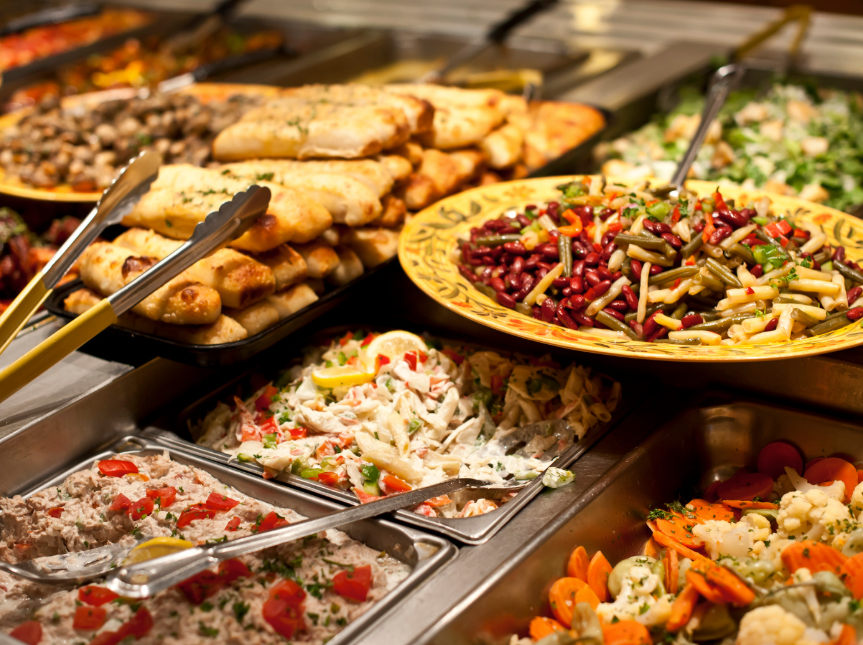
A Simple Holiday Buffet Game Plan
Before the event, eat normally rather than restricting to compensate for the upcoming meal.
When you arrive, look over the buffet before filling your plate so you can identify the foods you actually want.
Build a meal around a combination of foods that are nourishing and enjoyable, rather than trying to make the plate as “healthy” as possible.
Eat at a comfortable pace and check in with hunger and satisfaction as you go.
Have the holiday foods you love without treating them as forbidden or requiring yourself to earn them.
If you want more food, get more. If you are satisfied, give yourself permission to stop.
And if you eat past fullness, return to your normal routine at the next meal instead of trying to compensate.
That is mindful holiday eating in practice: not perfection, but awareness, flexibility, and enough self-trust to enjoy the meal without turning it into a test of willpower.
Frequently Asked Questions
1. How can I eat at a holiday buffet without overeating?
Start by eating normally earlier in the day so you do not arrive excessively hungry. At the buffet, look at all the choices first, select foods you genuinely want, eat at a comfortable pace, and check in with your hunger and satisfaction during the meal.
2. Should I skip meals before a holiday dinner?
Usually, skipping meals to “save calories” is not necessary and may leave you extremely hungry when you arrive. Eating regular, satisfying meals and snacks throughout the day can make it easier to approach the holiday meal with flexibility.
3. Can I eat dessert and still practice mindful holiday eating?
Absolutely. Mindful eating does not require eliminating dessert. Choose a dessert you genuinely enjoy, pay attention to the experience, and allow yourself to decide whether you are satisfied or would like another serving.
4. What should I do if I binge or eat too much at a holiday party?
Avoid trying to compensate by skipping meals or severely restricting food the following day. Return to your usual eating routine, consider what may have contributed to the episode, and seek professional support if episodes of binge eating are frequent, distressing, or feel outside your control.
5. How do I stop feeling guilty after eating holiday food?
Start by separating eating from morality. A meal is not evidence that you were “good” or “bad.” Instead, notice what you ate, how you felt physically and emotionally, and what you might want to do differently next time without turning the experience into punishment.
The holidays leave plenty of room for celebration and nourishment at the same table, and sometimes the healthiest choice is simply to eat the food you enjoy, notice how you feel, and move on with your day.